SECCIONES
BAJA
NEWS
20-11-2026
Web
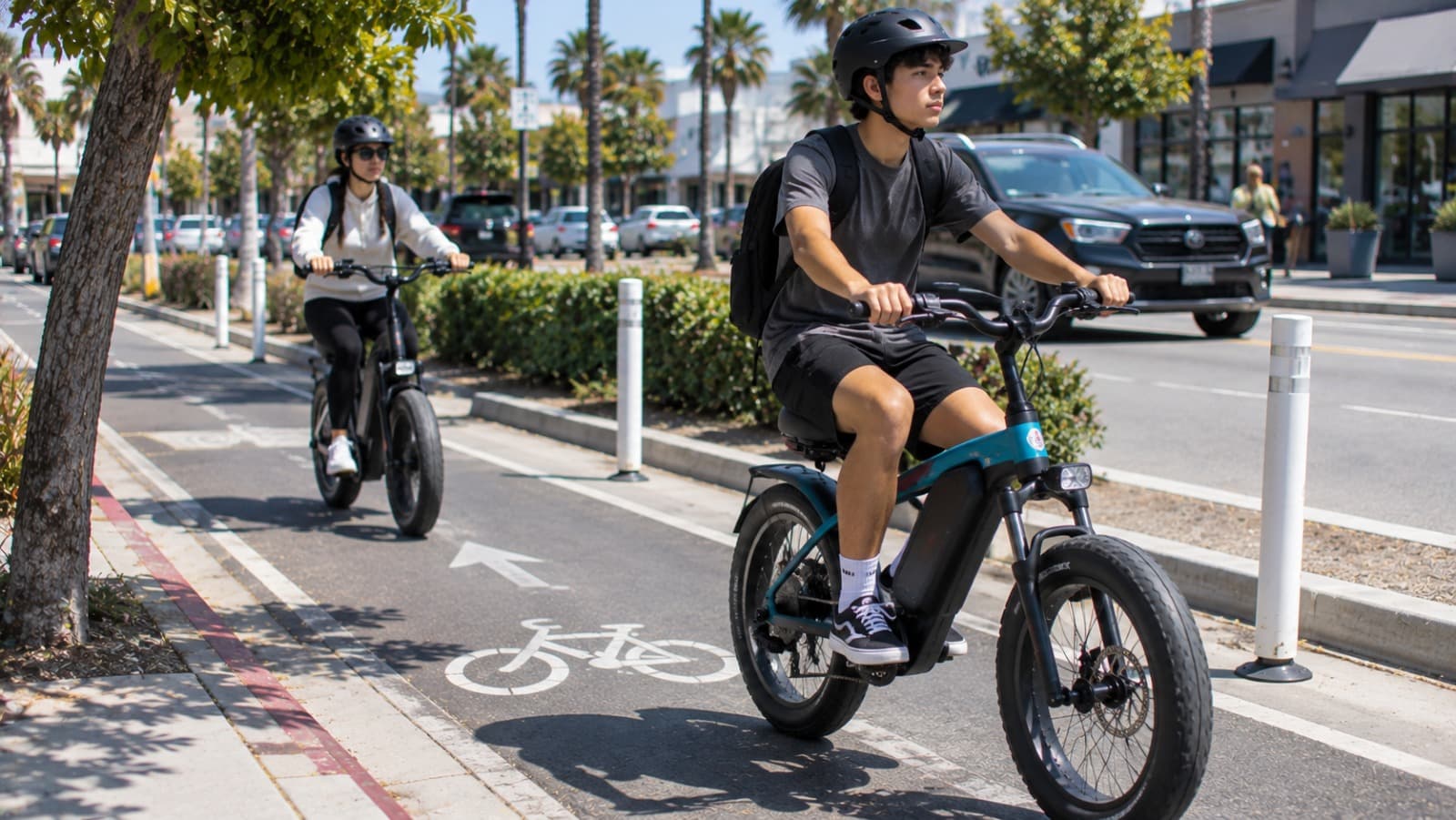
San Diego, Chula Vista and Carlsbad have introduced restrictions for minors. Regulations also establish speed limits, mandatory helmet requirements and areas where electric bicycles are prohibited.
Electric bicycle use continues to grow across California, but so have efforts to regulate their use and prevent accidents, particularly among children and teenagers.
Throughout 2026, new state laws and local ordinances took effect, establishing safety requirements, minimum age limits for certain models and restrictions on where electric bicycles can be ridden.
The rules are not exactly the same throughout San Diego County, meaning riders must understand both state regulations and the local ordinances in the cities where they ride.
What types of electric bicycles are there?
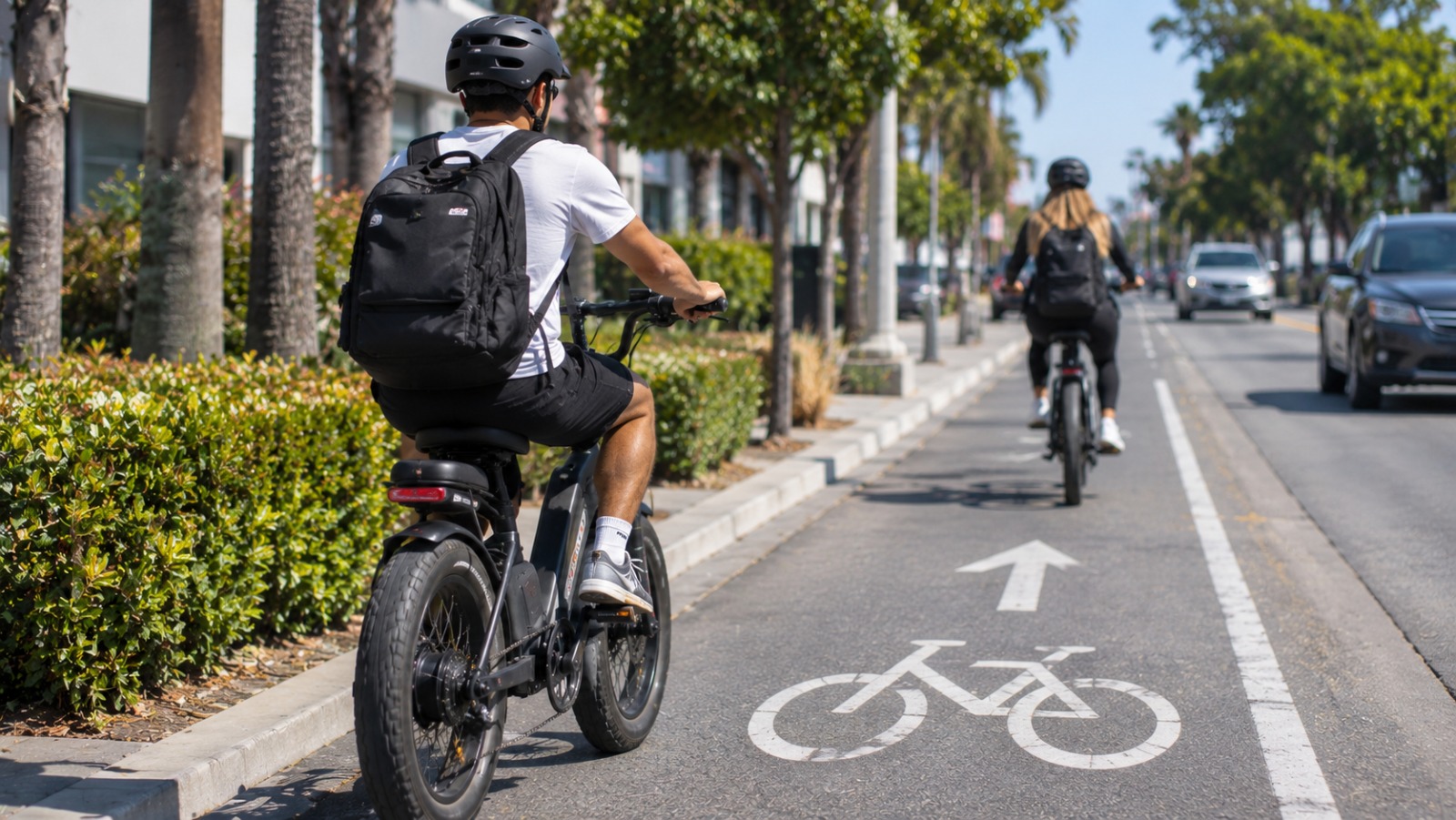
California recognizes three categories of electric bicycles, provided they have fully functional pedals and an electric motor that does not exceed 750 watts:
• Class 1: Provide electric assistance only while the rider pedals. The motor stops providing assistance once the bicycle reaches 20 miles per hour.
• Class 2: Equipped with a throttle, allowing the bicycle to move using the motor without pedaling. Motor assistance is limited to 20 miles per hour.
• Class 3: Provide electric assistance only while pedaling and have a maximum assisted speed of 28 miles per hour. They must be equipped with a speedometer.
The classification is important because it determines minimum age requirements, helmet rules and where each type of bicycle is permitted to operate.
How old must someone be to ride an electric bicycle?
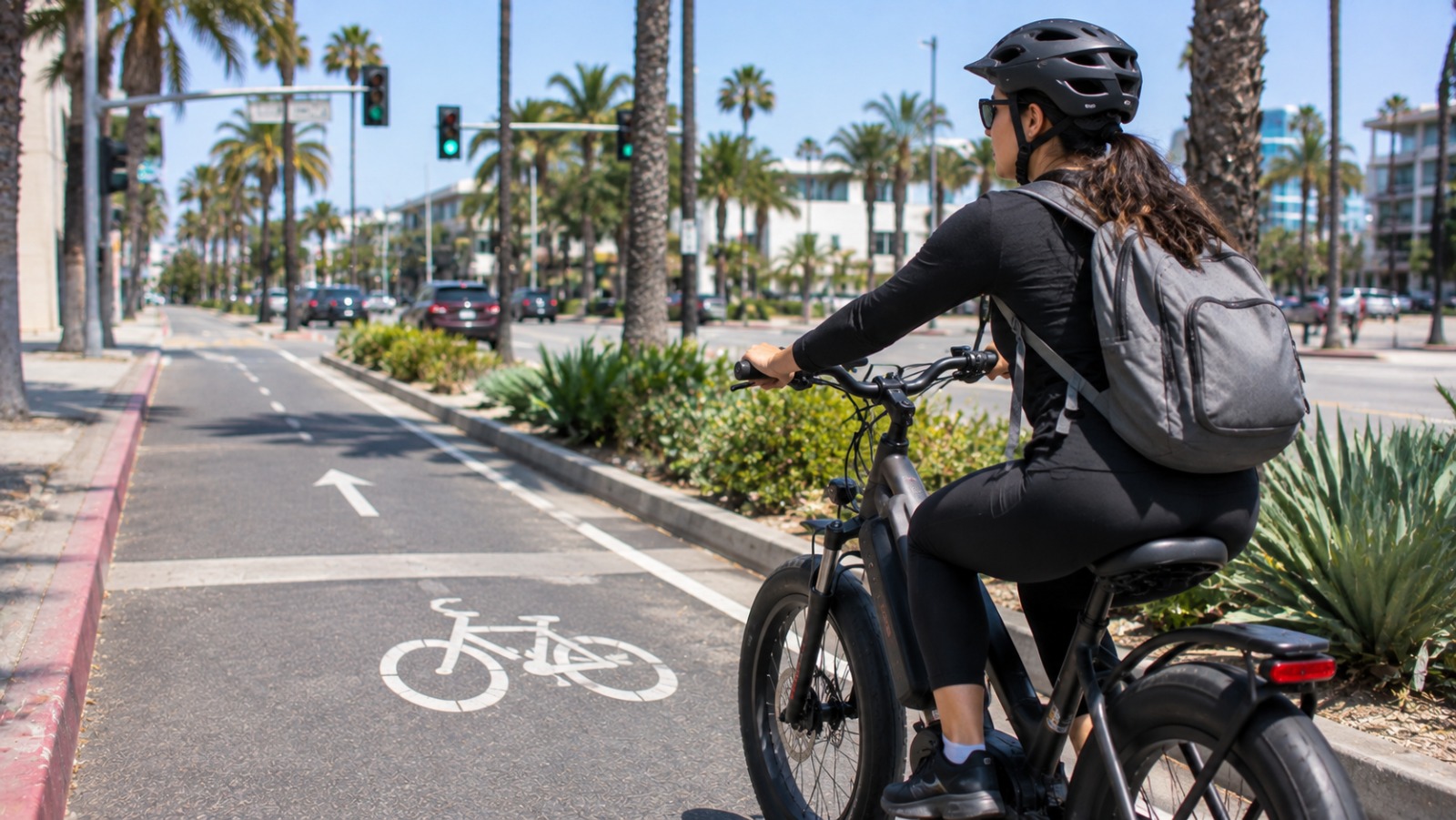
At the state level, California does not establish a general minimum age for riding Class 1 and Class 2 electric bicycles. However, the state allows cities and San Diego County jurisdictions to impose restrictions preventing children under 12 from operating them.
For Class 3 electric bicycles, state law requires riders to be at least 16 years old.
The following local regulations apply in San Diego County:
• City of San Diego: As of August 13, 2026, children under 12 are prohibited from riding Class 1 and Class 2 electric bicycles on streets, in parks, on paths, trails and other public areas designated for bicycle use.
• Chula Vista: Prohibits children under 12 from operating Class 1 and Class 2 electric bicycles.
• Carlsbad: Established a minimum age of 12 for electric bicycle riders beginning March 26, 2026.
The statewide minimum age of 16 for Class 3 electric bicycles also applies in all these jurisdictions.
Are helmets mandatory?
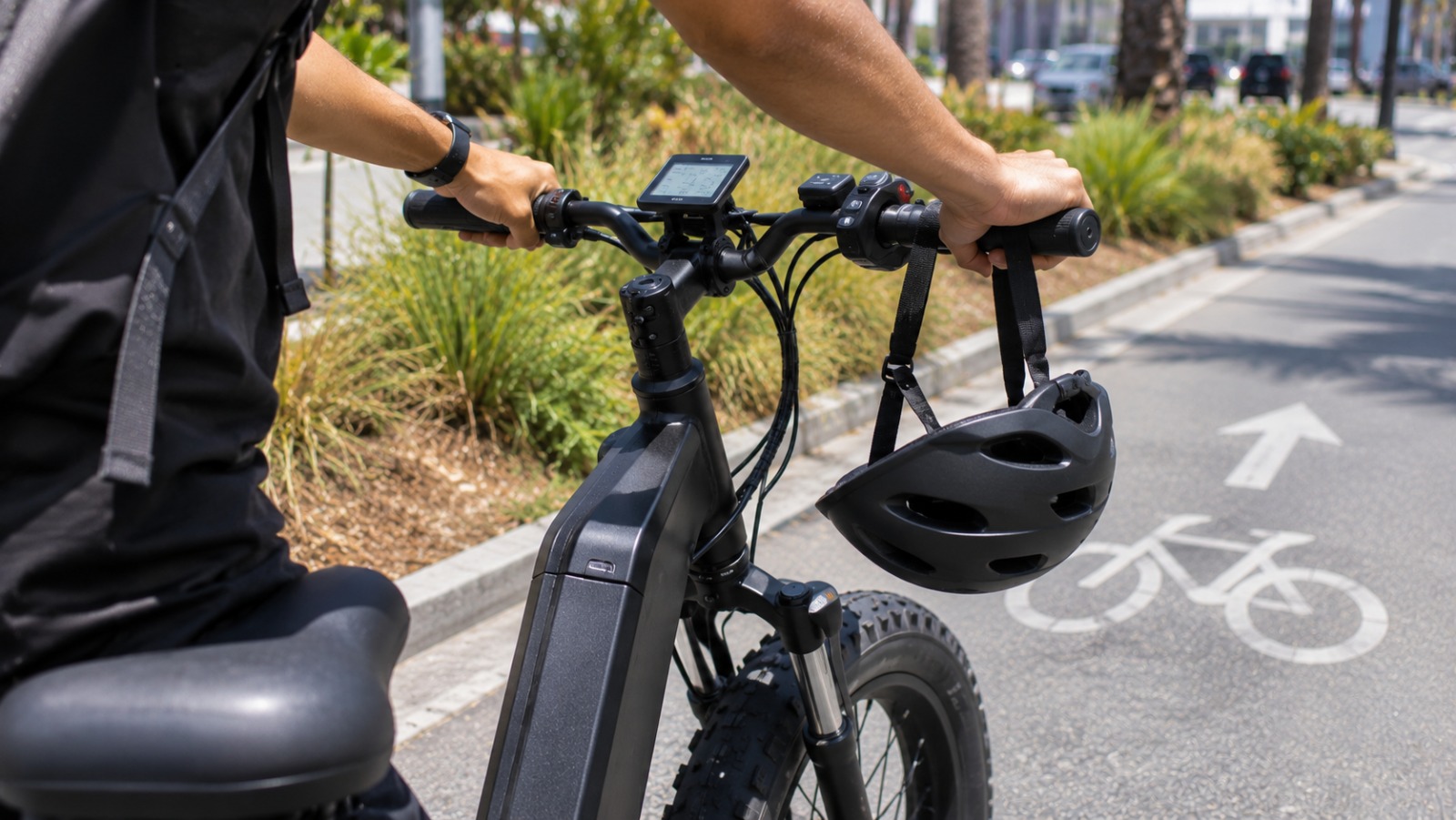
Yes. California requires riders under 18 to wear helmets when operating Class 1 and Class 2 electric bicycles.
For Class 3 electric bicycles, helmets are mandatory for all riders, regardless of age.
In the City of San Diego, local regulations also require helmets to be properly fitted and securely fastened.
Where are electric bicycles allowed?
In California, electric bicycles can generally be ridden in the same areas where traditional bicycles are permitted, including streets, bicycle lanes and certain trails.
However, restrictions vary depending on the bicycle's classification and local regulations.
In the City of San Diego, authorities allow electric bicycles on bicycle lanes, streets and most paths designated for bicycle use. The city also imposes restrictions on riding along sidewalks and in pedestrian areas.
In Chula Vista, Class 1 and Class 2 electric bicycles are prohibited on sidewalks in commercial districts and in areas where signs restrict their use. Class 3 electric bicycles are prohibited from sidewalks throughout the city.
In Carlsbad, Class 1 and Class 2 electric bicycles can generally use areas open to traditional bicycles, while Class 3 models are restricted to bicycle lanes or separated paths alongside streets.
Additionally, local authorities and park agencies may prohibit electric bicycles on certain recreational trails, equestrian trails and natural areas.
What are the fines for violating the rules?
Penalties depend on the jurisdiction and the type of violation.
In the City of San Diego, violating the prohibition on children under 12 riding Class 1 and Class 2 electric bicycles can result in a $25 fine.
However, the ordinance allows the penalty to be waived if a parent or guardian provides proof, within 120 days of the violation, that the child completed an approved electric bicycle safety course.
In Chula Vista, fines are set at $50 for a first violation, $100 for a second violation and up to $250 for subsequent violations. Authorities may also impound and store vehicles that violate municipal regulations.
In Carlsbad, authorities may impound electric bicycles when a minor violates the rules and poses an immediate or significant threat to public safety. Recovering the bicycle may require completing an in-person safety course and having a parent or guardian present.
New California state rules that took effect in 2026
Among the recent measures are:
• AB 544: Effective January 1, 2026, all electric bicycles must have a red rear reflector or a steady or flashing red rear light with an integrated reflector whenever they are operated.
• SB 1271: Establishes safety requirements for electric bicycles, mobility devices and their lithium-ion batteries. Applicable products and components must meet relevant safety standards and undergo testing by accredited laboratories. The law also establishes restrictions on the sale and distribution of equipment that does not meet those standards.
What will change in 2027?
Another important measure is AB 2346, approved in September 2026.
The new legislation will allow local authorities to establish speed limits of 10, 15 or 20 miles per hour on bicycle lanes and shared-use trails, provided applicable signage requirements are met.
It also establishes a general speed limit of 10 miles per hour on sidewalks, effective January 1, 2027.
Speed restrictions already established on bicycle lanes and trails before that date may remain in effect.
The legislation also includes additional requirements for bicycles manufactured or sold beginning January 1, 2029. These include speedometers for Class 2 models, front and rear lights, and additional information about bicycle specifications at the time of sale.
Do electric bicycles require a driver's license, registration or insurance?
Electric bicycles that meet California's legal classification do not require a driver's license, vehicle registration, license plates or insurance to operate.
However, they should not be confused with electric motorcycles.
Vehicles such as certain Sur-Ron and Talaria models, which do not have functional pedals and are designed to operate as motorcycles, do not qualify as electric bicycles under state law.
Electric motorcycles intended for use on public roads must meet different requirements, including the appropriate driver's license, registration and insurance.
As of January 2026, California also established a specific classification for off-highway electric motorcycles, commonly known as e-motos.
These vehicles are subject to motorized recreational vehicle regulations and cannot freely operate on public streets.
Authorities recommend checking a vehicle's legal classification before purchasing it, particularly when it is marketed as an electric bicycle but has features typically associated with a motorcycle.

El aspirante a coordinar el Distrito Quinto Federal invitó a la militancia y simpatizantes a partici ..
hace 12 minutos
Las jornadas acercaron trámites y orientación sobre programas de apoyo a las familias, principalment ..
hace 16 minutos
San Diego, Chula Vista and Carlsbad have introduced restrictions for minors. Regulations also establ ..
hace 21 minutos